News
 BACK TO LIST
In an era where quarterly earnings dictate success and market trends shift in the blink of an eye, "Long-Termism" seems both a luxury and counterintuitive. Yet, when we look at the companies that truly weather economic cycles and achieve lasting success, we consistently find a common trait: a steadfast commitment to core values, a focus on long-range goals, and a management philosophy that prioritizes steady progress over immediate gains.
Sung Yang Industrial (SYK), a Taiwanese manufacturer of precision motion components, is a staunch believer in this philosophy. Starting as an unknown OEM factory in 1989, SYK has, over three decades, built a distinct brand image synonymous with "stability" and "speed" in the global market for high-precision SYK Ball Screw Support Units. SYK's transformation is more than just a corporate success story; it's a profound leadership lesson in long-termism for all leaders contemplating sustainable business growth.
Decoding Leadership Traits: SYK's Blend of "Slow" and "Fast"
Analyzing the decision-making style of SYK's leadership team reveals a unique "slow burn, fast strike" philosophy. They engage in slow, deliberate thinking and deep strategic planning for core strategies, yet pursue rapid response and swift delivery in execution.
1. Slow Work Yields Fine Results: Focusing on Core Technology, Deepening Vertical Integration
Many companies, in their pursuit of rapid expansion during growth phases, opt for asset-light, alliance-heavy outsourcing models. SYK took the opposite path, dedicating decades to deepening its "vertical integration." From lathing and milling to the critical processes of precision grinding, surface treatment, and assembly, they insist on keeping core processes that dictate quality firmly in their own hands.
- The Long-Term Thinking Behind the Decision: This seemingly "cumbersome" investment is, in reality, the ultimate pursuit of their core promise: "quality." The leadership team understood that only by completely controlling the production process could they fundamentally eliminate the uncertainties of outsourcing and ensure every SYK Ball Screw Support Unit meets the stringent precision demanded by customers. It was a strategic choice to trade short-term flexibility for long-term quality stability.
2. Full Speed Ahead: Honoring Delivery Commitments, Responding to Market Speed
Built on the solid foundation of vertical integration, SYK can make delivery promises rarely seen in the industry: 1-3 days for standard parts, 5-7 days for customized modifications. This isn't just a demonstration of operational efficiency; it's a deep understanding and respect for customer needs.
- The Long-Term Thinking Behind the Decision: In SYK's view, "fast delivery" isn't about snatching orders; it's about enabling customer success. They understand the pressure engineers face with R&D timelines and the urgent need system integrators have for timely component delivery. By shortening lead times, SYK essentially transforms its own operational efficiency into a competitive advantage for its customers, fostering a "mutual prosperity" partnership.
3. Customer-Centricity: Flexible Service, Empowering Partners
SYK's offering of "No Minimum Order Quantity (No MOQ)" and "Rapid Customization Modification" seems out of place in the standardized, high-volume manufacturing world. But this is the concrete manifestation of their customer-centric philosophy.
- The Long-Term Thinking Behind the Decision: SYK doesn't position itself merely as a component supplier but as an "enabler" within the customer's R&D and production processes. They willingly accept small-batch, high-frequency orders to support customers' prototyping and flexible production needs. This seemingly "troublesome" service is, in fact, a continuous investment in building long-term customer trust.
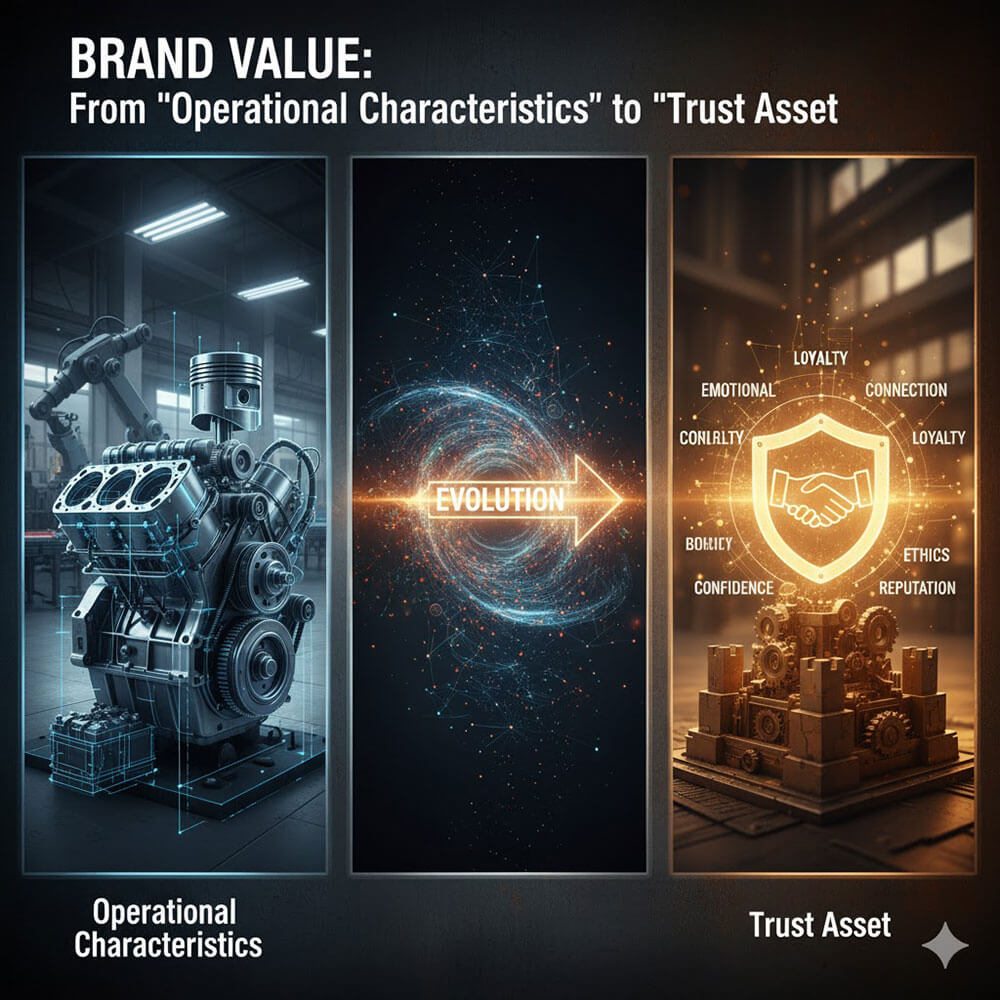
The Alchemy of Brand Value: From Operational Traits to Trust Assets
"Stability" and "Speed"—these seemingly contradictory traits are the core of SYK's brand value. This isn't a marketing slogan created overnight but a "trust asset" gradually built in customers' minds over thirty years, through every on-time delivery and every quality guarantee.
- Stability: Stems from an obsession with quality and the control afforded by vertical integration. For customers, choosing an SYK Ball Screw Support Unit means choosing predictable performance and extremely low operational risk.
- Speed: Stems from process optimization and a commitment to customer needs. For customers, SYK's speed translates to shorter time-to-market, lower inventory costs, and more agile market responsiveness.
When customers in high-precision, high-demand applications (like semiconductor equipment or CNC machine tools) prioritize SYK, they are buying more than just a physical component; they are buying the "certainty" and "reliability" that the SYK brand represents. This is the key to SYK's successful transformation from an OEM factory to a high-value brand.
Editor's Perspective: SYK's Long-Termism Management Principles
|
Leadership Trait |
SYK's Specific Practice |
Resulting Brand Value |
Takeaway for Managers |
|
Focus on Core Tech |
Invests in vertical integration, masters key processes like grinding |
Quality Stability |
Go deep on core competencies |
|
Commitment to Delivery |
Optimizes internal flow for 1-3 day (standard)/5-7 day (custom) delivery |
Speed & Reliability |
Efficiency is a promise |
|
Customer-Centricity |
Offers No MOQ, rapid customization modifications |
Trusted Partner |
Enable customers to succeed |
Takeaways for Managers: Three Learnable "Long-Termism" Principles
SYK's journey offers valuable insights for all leaders striving to build sustainable businesses:
- Principle 1: Earn Trust, Not Just Quick Money. In the short term, outsourcing and chasing the largest orders might bring faster revenue growth. But SYK's choice proves that focusing on perfecting the core product and adhering strictly to quality and delivery promises, though slower, builds the most irreplaceable asset: customer trust. Trust is the passkey for navigating economic cycles.
- Principle 2: Go Deep on Your Core, Don't Chase Trends. Faced with rapidly changing technology waves, many companies exhaust themselves. SYK has remained focused on the "precision motion" core domain for decades, continuously investing in deepening its technical and process capabilities. They demonstrate that rather than constantly chasing the next big thing, mastering your core competency to the extreme makes you an indispensable value node that others cannot bypass.
- Principle 3: Enable Customer Success, Don't Just Satisfy Needs. Satisfying a customer is transactional; enabling their success creates a partnership. SYK's flexible services effectively lower the barrier to innovation for their customers and accelerate their path to success. This "mutual prosperity" mindset transcends traditional buyer-seller relationships, builds deeper partner connections, and secures a more stable market position for SYK itself.
Manager's FAQ
Q1: Under pressure for short-term shareholder value, how can leaders stick to long-term investments like vertical integration?
A1: The key lies in redefining "value." Leaders need to clearly communicate to boards and investors that long-term investments like vertical integration yield returns not just in the next quarter's margins, but in operational resilience, brand premium, and customer lock-in over future years. Position these investments as "strategic hedges" against supply chain risks and for building a long-term moat, not merely as capital expenditures. Back this up with data showing long-term benefits like reduced TCO and improved customer satisfaction.
Q2: What was the most critical turning point or decision in SYK's transition from OEM to brand?
A2: The most crucial turning point, in my view, was SYK's decision to insist on facing the market directly under its own "SYK" brand and making the extremely high-standard public commitment to "stable quality and fastest delivery." This forced them to elevate their internal processes and quality control to world-class levels. It also made the market recognize SYK not just as a manufacturer, but as a guarantor. This commitment ultimately became internalized as corporate culture and core brand value.
Q3: "Earn trust, not quick money" sounds idealistic. How do you balance ideals with reality in a competitive market?
A3: The key to balance is "focus." SYK doesn't try to serve all markets or all customers. They focus on niche markets with stringent requirements for quality, precision, and delivery (like semiconductors, high-end CNC). In these markets, "trust" itself is the highest value, and customers are willing to pay a reasonable premium for predictable quality and delivery. Through precise market positioning, SYK transforms "trust" into a sustainable profit model.
Q4: For companies wanting to learn from SYK's "long-termism," what organizational capabilities should leaders prioritize building?
A4: I believe there are three key capabilities:
- Deep technical/process mastery: The foundation for stable quality and continuous innovation.
- Excellent internal process integration: The key to rapid response and efficiency.
- A culture oriented towards customer success: The cornerstone for building long-term partnerships. These three are mutually reinforcing and indispensable.
Q5: How does SYK effectively communicate operational traits like "stability" and "speed" to international customers and build its brand image?
A5: Besides letting the product speak for itself, SYK employs a "value-driven" communication strategy. They don't just talk about the specs of an SYK Ball Screw Support Unit; they emphasize how those specs solve customer "pain points" (e.g., shortening R&D cycles, reducing inventory costs, preventing downtime losses). Through case studies, technical white papers, and in-depth content like this, they translate operational advantages into tangible business value that customers can perceive, gradually building a professional and reliable international brand image.
Q6: Facing disruptions from emerging technologies (like AI, smart manufacturing), does SYK's "long-termism" strategy need adjustment?
A6: Long-termism doesn't mean rigidity. SYK's strategy is "core unchanged, application adapted." Their core—providing stable, fast, high-quality precision motion components—remains constant. However, they actively embrace new technologies to optimize internal processes (e.g., adopting automated inspection, smart scheduling) and expand product applications in emerging fields (e.g., in AI server automation, medical robotics). The key is that the application of new technology must serve their core commitment to "stability" and "speed," rather than chasing technology for technology's sake.
Conclusion: Time is a Brand's Most Loyal Friend
SYK's story reminds us that in the fast-changing business world, some of the oldest management wisdom proves timeless. Focusing on the core business, honoring commitments, and prospering together with customers—these seemingly simple principles are the bedrock upon which SYK weathered thirty years of storms and transformed from an OEM factory into an internationally trusted brand.
For all leaders, the real challenge may not lie in predicting the future, but in making a choice: Is your every decision adding gloss to the next quarterly report, or laying the foundation for the next decade of sustainable growth? Time will eventually provide the answer, and it will reward those who choose to be its friend.
An Action Guide for Managers
Are your decisions aimed at the next quarter's earnings, or are you building for the next decade?
Dive deeper into SYK's brand story now. Explore how a Taiwanese company uses the wisdom of "long-termism" to forge a path of sustainable management that withstands economic cycles.