News
 BACK TO LIST
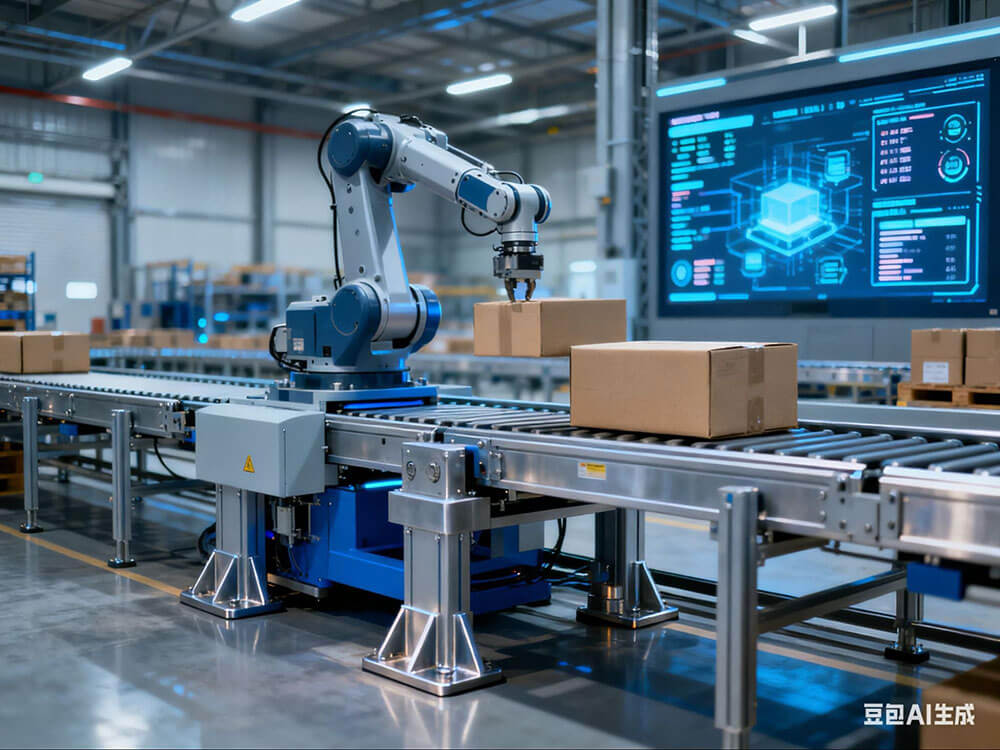
The tides of e-commerce and smart manufacturing are fundamentally reshaping the global supply chain landscape. Consumer demands for "next-day" or even "same-hour" delivery have shifted from occasional promotional peaks to the normalized standard of business. This immense pressure, driven by hundreds of billions of parcels flowing globally each year, is forcing corporations to pour massive capital into warehouse and logistics automation. This is no longer an "option"; it is a "necessity."
However, as we marvel at the fluid choreography of AGV (Automated Guided Vehicle) fleets and the high-speed operations of AS/RS (Automated Storage and Retrieval Systems), a far more severe operational challenge has surfaced: in a 24/7/365 environment, "Zero Downtime" is no longer an ideal operational goal—it is the bottom line for profitability, market share, and corporate survival.
In this race, defined by "stability" and "efficiency," decision-makers are painfully discovering that the operational resilience and financial performance of an entire multi-million-dollar automated warehouse depend on the most inconspicuous, yet most highly stressed, foundational components—such as the High Rigidity Support Unit.
The Operational Achilles' Heel: The Hidden Costs of a Single AGV Failure
Traditional logistics relies on human labor, where failures are isolated and containable. Automated logistics, however, strives for high interdependence, making its risks systemic. In a smart warehouse precisely orchestrated by a WMS (Warehouse Management System), the failure of any single hardware component can trigger a catastrophic cascading failure.
- AS/RS Z-Axis Failure: The Z-axis, responsible for vertical lift, is the heart of the system. If the support unit for its drive system (like a ball screw) fails due to metal fatigue, loss of precision, or impact, the entire aisle's retrieval operations are instantly paralyzed. This not only makes tens of thousands of bin locations inaccessible but also brings downstream picking and packing stations to a grinding halt, creating an "operational vacuum."
- High-Speed Sorter Errors: The diverter arms or pop-up devices on a high-speed sorter actuate thousands of times per hour, enduring continuous shock loads. A minuscule positioning error—perhaps just a few millimeters caused by insufficient rigidity—can lead to a mis-sort. The subsequent reverse logistics costs, including manual intervention, re-sorting, customer complaints, and lost orders, far exceed the cost of the hardware itself.
- AGV Fleet "Gridlock": If one AGV stops in a main thoroughfare due to a lift mechanism failure, it causes a traffic jam across the entire robotic network. This is akin to an accident at a major traffic hub during rush hour; all subsequent AGVs are forced to reroute or stop, causing system efficiency to collapse instantly.
Industry data shows that for every hour a large distribution center is down, the operational losses and order delay costs can run into the hundreds of thousands of dollars. Clearly, a procurement decision focused solely on the initial capital expenditure (CAPEX) of automation, while ignoring the long-term operational and maintenance costs over the next decade (the "Total Cost of Ownership," or TCO), is tantamount to planting countless risk factors in the company's primary revenue stream.
Redefining "Reliable": Why High Rigidity is the Foundation of Logistics Automation
The demanding nature of logistics automation requires equipment to strike a near-paradoxical balance between "high-speed motion" and "heavy-load bearing," and to repeat this extreme action millions of times. This places an ultimate challenge on the "rigidity" of the drive system.
Rigidity is a component's ability to resist deformation. High-speed motion generates immense inertia, while heavy loads apply constant static pressure. A component with insufficient rigidity cannot absorb these forces, resulting in micro-vibrations and deflection. In an automated warehouse, "rigidity" directly translates into the following key performance indicators:
- Z-Axis Positioning Accuracy (AS/RS): The Z-axis ball screw must support a shuttle and payload weighing hundreds of kilograms. A High Rigidity Support Unit (like SYK's WBK heavy-load series) ensures that when the Z-axis stops instantly after a high-speed lift, it experiences zero "wobble" or "deflection." These micro-deviations are the root cause of misalignment and potential collisions with the racking.
- AGV Lift Stability: An AGV's lift mechanism must smoothly elevate high-value goods within an extremely confined space. SYK's SYK Ball Screw Support Unit, with its precision bearing preload and solid construction, provides powerful torsional resistance, ensuring a smooth, vibration-free lift. This isn't just about preventing goods from toppling; it's about protecting other expensive automation equipment from collisions.
- High-Actuation Durability (Sorter): The drive components for high-speed sorter arms must withstand continuous, high-frequency impact loads. A High Rigidity Support Unit using high-grade TAC bearings is designed to absorb impact, not transmit it, giving it a service life far beyond standard parts. This significantly extends the Mean Time Between Failures (MTBF) and guarantees the sorter's continuous operation.
In this field, opting for a cheap, low-rigidity standard part may seem like an initial saving, but it is, in reality, a down payment on future expensive, catastrophic maintenance events.
SYK's Strategic Value: From "Component Supply" to "Operational Assurance"
Facing the "zero downtime" challenge of Logistics 4.0, what Sung Yang (SYK) provides is no longer just a component, but a predictable "operational assurance."
- Vertical Integration for Quality Consistency: When a warehouse needs to deploy hundreds of identical AGVs, the biggest fear is "batch inconsistency." SYK insists on a one-stop vertical integration—from raw materials, machining, and precision grinding to assembly. This ensures that the 100,000th SYK Ball Screw Support Unit has the exact same rigidity and precision as the first. This consistency is the bedrock upon which large-scale automated systems can operate reliably.
- Fast Lead Times for MRO Optimization: Equipment always needs maintenance. But SYK's "1-3 day delivery for standard parts" promise completely liberates a distribution center's MRO (Maintenance, Repair, and Operations) department from the burden of "spare parts inventory." They no longer need to hoard massive stockpiles—which are essentially "sleeping assets"—to buffer against multi-week component lead times. SYK's rapid delivery enables a lean, JIT maintenance strategy, freeing up frozen working capital to be invested in higher-value activities.
Editor's Viewpoint: The Risks & Rewards of Logistics Automation
|
Operational Challenge |
Risk Factor |
SYK's Strategic Value (High Rigidity Support Unit) |
|
AS/RS Downtime Risk |
Z-axis misalignment, high-load vibration |
WBK Heavy-Load Series: Provides extreme axial rigidity for micro-level precision under heavy loads. |
|
AGV Operational Failure |
Lift mechanism failure, unstable load |
SYK Standard Support Units (LK/EK): Compact design offering high-reliability, smooth lifting. |
|
Sorter Line Inefficiency |
Rapid wear on diverter arms, frequent maintenance |
Precision Bearing Configuration: Designed for high-frequency, high-impact applications to extend service life. |
|
High Maintenance Costs |
Capital tied up in spare parts inventory |
1-3 Day Fast Delivery: Enables JIT maintenance, reducing inventory costs and freeing up cash flow. |
Conclusion: The Decisive Point Lies in the Strongest Foundation
In the competition for logistics automation, the first half was about "implementation speed" and "software intelligence." The second half, however, will be decided by "operational resilience" and "long-term reliability."
For decision-makers in the logistics industry, the return on an automation system isn't just about how much labor it saves, but to what degree it can provide "uninterrupted" service over the next decade. Choosing a foundational component like the SYK Ball Screw Support Unit—one that offers high rigidity, proven reliability, and rapid delivery—is not just a technical decision. It is a critical strategic investment to ensure a company's competitiveness and profitability in the era of Logistics 4.0.
Manager's FAQ
Q1: Logistics automation is extremely cost-sensitive. Why should I choose SYK over a cheaper, standard support unit?
A1: This is a decision between "initial purchase price" and "Total Cost of Ownership (TCO)." A single hour of downtime in a large distribution center can cost hundreds of thousands of dollars—a sum that can easily exceed the hardware value of your entire drive system. A low-cost part carries an extremely high "risk premium." By investing in SYK's High Rigidity Support Unit, you aren't just buying a part; you are buying an insurance policy for long-term operational stability. From a TCO perspective, it's the most cost-effective investment you can make.
Q2: For the Z-axis on an AS/RS system, what are the specific benefits of "high rigidity"?
A2: The key benefits are "positioning accuracy" and "lifespan." When the Z-axis moves and stops at high speed while carrying a heavy load, it generates immense inertia and axial forces. A High Rigidity Support Unit (typically using heavy-load TAC bearings) effectively suppresses micro-deformations and vibrations, ensuring the shuttle aligns perfectly every time and avoids collisions. Furthermore, superior rigidity means slower wear, ensuring the equipment maintains its "in-service precision" over a 10+ year lifespan, not just its "factory-new precision."
Q3: The lift mechanism on our AGVs is extremely compact. Does SYK have a suitable solution?
A3: Yes. We understand the extreme spatial constraints of AGVs. SYK offers a variety of compact solutions, such as the flange-style EK/EF series or the small-footprint square BK/LK series. These products deliver the high-standard rigidity and reliability of an SYK Ball Screw Support Unit within a minimal volume, making them ideal for the lift modules in AGVs and AMRs.
Q4: We are a logistics systems integrator (SI), and lead time is critical for us. How does SYK's "fast lead time" help?
A4: We deeply understand the project timeline pressures faced by SIs. SYK's agile lead time of "1-3 days for standard parts, 5-7 days for modifications" offers you two major advantages:
- Accelerated Development: You get parts for prototyping and validation at maximum speed.
- De-risked Deployment: You don't need to pre-order and stockpile parts just to avoid delays. SYK acts as your reliable backup, shipping components in sync with your project schedule and even handling last-minute design changes.
Q5: What is the tangible benefit of SYK's "vertical integration" for a logistics equipment manufacturer?
A5: The tangible benefit is "absolute quality consistency." When you need to procure 100 identical AS/RS systems or 500 AGVs for a warehouse, your biggest nightmare is batch-to-batch variation. SYK's vertical integration ensures every process, from grinding to assembly, is performed under the same high standard, guaranteeing uniformity and reliability across massive-scale deliveries.
Q6: How can I quantify the ROI of investing in SYK's High Rigidity Support Units?
A6: Your ROI is twofold:
- Direct Returns (OEE Improvement): By significantly extending the "Mean Time Between Failures" (MTBF), you directly increase Overall Equipment Effectiveness. High-rigidity components wear slower and more predictably, which is the key to improving MTBF.
- Indirect Returns (Cost Savings): You reduce costs from downtime-related order penalties, manual interventions, and the working capital freed up by a JIT maintenance strategy (which SYK's fast delivery enables). These "invisible" savings often far outweigh the initial hardware price difference.
An Action Guide for Managers
Is your automation investment creating profit, or is it harboring an operational risk ready to explode?
Contact SYK's technical experts today for a "Drivetrain Reliability Health Check" on your existing logistics equipment.